Part 4: Biodiversity
Part 4
There are things often missing in our storytelling.
Our characters don't know where their food comes from, and don't particularly care. They live in rat-free cities, moth-free apartments, and work in insect-free offices. They walk through silent forests without ever crossing paths with a fox (unless they're Fleabag), and inhabit bodies that never feel the chill of the undergrowth, the smell of earth after rain, or the startling discovery of a spider in the bathtub. They almost never have pets unless they're elderly or eccentric, and they only water their houseplants if they're psychologically uptight or misanthropic.
They exist, immaculately, outside the realm of the living. They float.
Western modernity has been built on a false premise: that humans are not part of nature, but its masters. This idea powered the Industrial Revolution, was cemented by the mass exodus from rural areas, and amplified by urbanization. Today, for the first time in the history of our species, the majority of humans are born, grow up, and die without ever having put their hands in the soil.
Did you know?
This human/nature divide is not universal. It is a historical quirk of Western "naturalism." For millennia, and still in many societies today, humans were understood not as separate from nature, but as an integral part of it. It is this break that enables unlimited exploitation. See Beyond Nature and Culture by Philippe Descola.
Fiction obviously did not create this separation. But it reproduces, normalizes, and reinforces it: the world of our fictional characters is, by default, entirely human unless our scripts adopt a theme that compels us to portray a relationship with the living world. And because repetition eventually establishes norms, this untethered character ultimately defines what is considered normal.
Yet the transition to a more sustainable future requires millions of people to fundamentally change their relationship with the living world. But if that world has no presence in the collective imagination, if nature is a distant "outside" rather than a web we are woven into, then this call for change will feel like a sacrifice.
Thankfully, with fiction we can do exactly the opposite: integrate biodiversity in the world of our characters. Not as a backdrop or a message, but as a reality.
⚠ Warning:
Before we dive into this chapter, a MAJOR WARNING:
Nature does not volunteer to appear in our films.
While horses or dogs may do just fine on a controlled set, they are the exception. Animals and plants, as well as natural sites home to ecosystems as fragile as they are rich (peat bogs, nature parks, and so on), deserve a place in our storytelling — but depicting them must go hand in hand with environmentally responsible production practices. There are effective solutions, sound design for insects, AI, visual effects, and more, but they require adequate budget planning and early conversations with the broader production team.
True story:
In 2018, during a film shoot, a microlight aircraft flew over hundreds of flamingos in the Camargue region of southern France. The noise triggered a panic. The result: 500 abandoned flamingo eggs — representing 11.5% of that year's entire clutch.
"I know of a film shoot where goats died of stress from scenes that were actually quite harmless. Heart attacks."

a. Animals
1. Wildlife
Livestock farming, fishing, and agricultural settings are entire dramatic worlds in their own right (see our agriculture toolkit). But beyond that, rural wildlife opens up storytelling territory that French fiction has barely touched.
Did you know?
Do you really love all animals equally?
Empathy toward animals follows a hierarchy. We tend to feel more empathy for creatures we perceive as closer to us. Be honest: between a cat and a goldfish, doesn't your heart lean one way?
According to psychologists Paulhus and Dean, four criteria shape our empathy toward animals:
(1) perceived intelligence,
(2) size,
(3) aesthetic appeal,
and (4) perceived harmfulness.
📌 Plot ideas
Urban wildlife: an unrepresented parallel world
Foxes are colonizing towns and cities and urban foxes, it turns out, are remarkably intelligent. Asian hornets are spreading everywhere. Wild boars are venturing into residential neighborhoods. Bats hibernate in the attics of farmhouses in the Perche region. Roe deer are wandering into suburban gardens, and green parakeets are taking over parks across Paris.
This kind of nature — invasive, uncontrollable, neither idealized nor abstract — is also absent from our fiction. And yet it is the nature that French people actually live with. How a character reacts to an unexpected animal in their space can be a powerful window into who they are.
📌 Plot ideas
Zoonoses: a dramatic stake
SARS, Ebola, H5N1, Lyme disease, COVID-19, all originated from a cross-species jump. Deforestation, factory farming, and the loss of natural habitats are pushing wild species into contact with human populations, creating the conditions for exactly this kind of transmission. This is not some futuristic abstraction. It is the texture of a world already in the process of changing.

Mayis Sikintisi, 1999
What makes zoonoses dramatically compelling is the chain of knowledge and ignorance they expose. Who notices first? Who warns whom? Who gets believed, and who gets dismissed? A rural vet who spots something unusual on a farm and calls the doctor in the next town over. An epidemiologist who traces a chain of infection back to a farmer who has no idea he's at the center of it all. A regional health authority must choose between culling an entire herd and risking the spread of the disease.
These stories also raise questions of moral and political responsibility: who is accountable when the boundary between animal and human breaks down? The farmer? The government? The consumer who bankrolls the whole system? Zoonosis as the revelation of an invisible chain — one whose stakes can suddenly become a matter of life and death. And within that, there is a question worth exploring: who spots it first? Who gets taken seriously? Zoonosis lays bare a hierarchy of expertise — and of credibility.
The unchosen housemates
Beyond the animals we choose to bring into our lives, there are those we never chose — yet live alongside every single day.
In almost every French apartment, pantry moths, mosquitoes, flies, mice — and sometimes bedbugs or cockroaches — coexist with us, whether we like it or not. Pigeons crowd our windowsills. Seagulls land on our boats. Roosters wake people up who never signed up for it.
Ticks, fleas, and chiggers take over our warmer months, while lice make their way through our kids' classrooms and into their hair.
And yet the way a character reacts to a mosquito keeping them awake all night, or to a doe appearing at the edge of their yard at dawn, can be one of the most precise and original tools for characterization. Fascination? Fear? The urge to chase it off? Tenderness? How a character perceives the non-human world is part of what makes them distinct.
Need another reason? With AI, adding insects has never been easier.
📌 Plot ideas
A character who feeds pigeons on their balcony, in constant conflict with the downstairs neighbor: a low-grade feud that quietly raises the question of what we're willing to tolerate when it comes to animals in shared spaces.
A character with a spider phobia living in a house infested with them: the phobia becomes a window into a relationship with the living world that is anything but idealized; and entirely human.
Bedbugs discovered in a rental apartment: the invisible creature as a symbol of precarity, shame, and the power dynamic with the landlord..
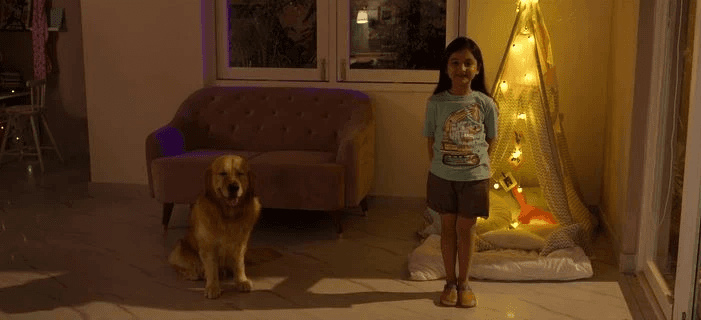
Hi Nanna, 2023
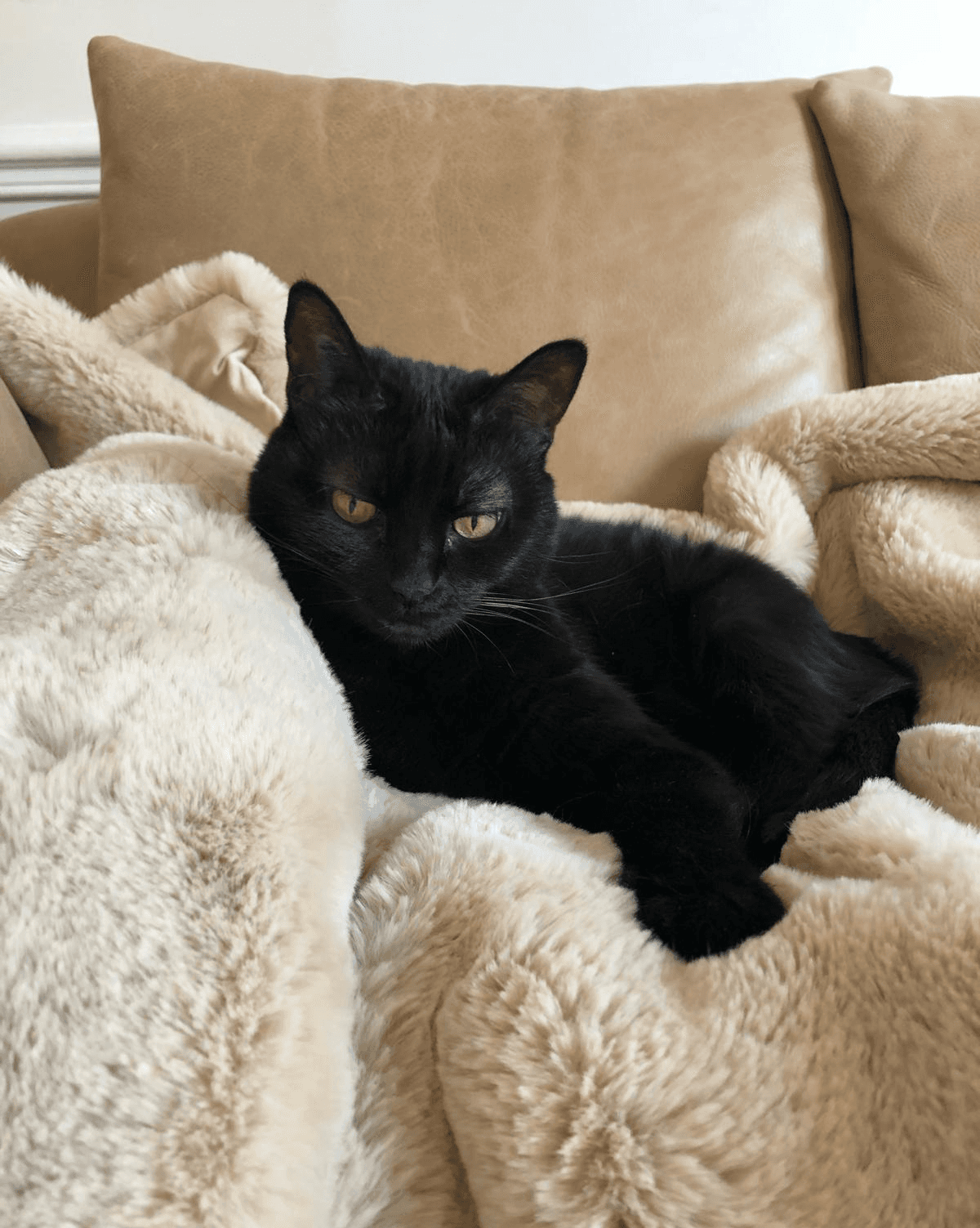
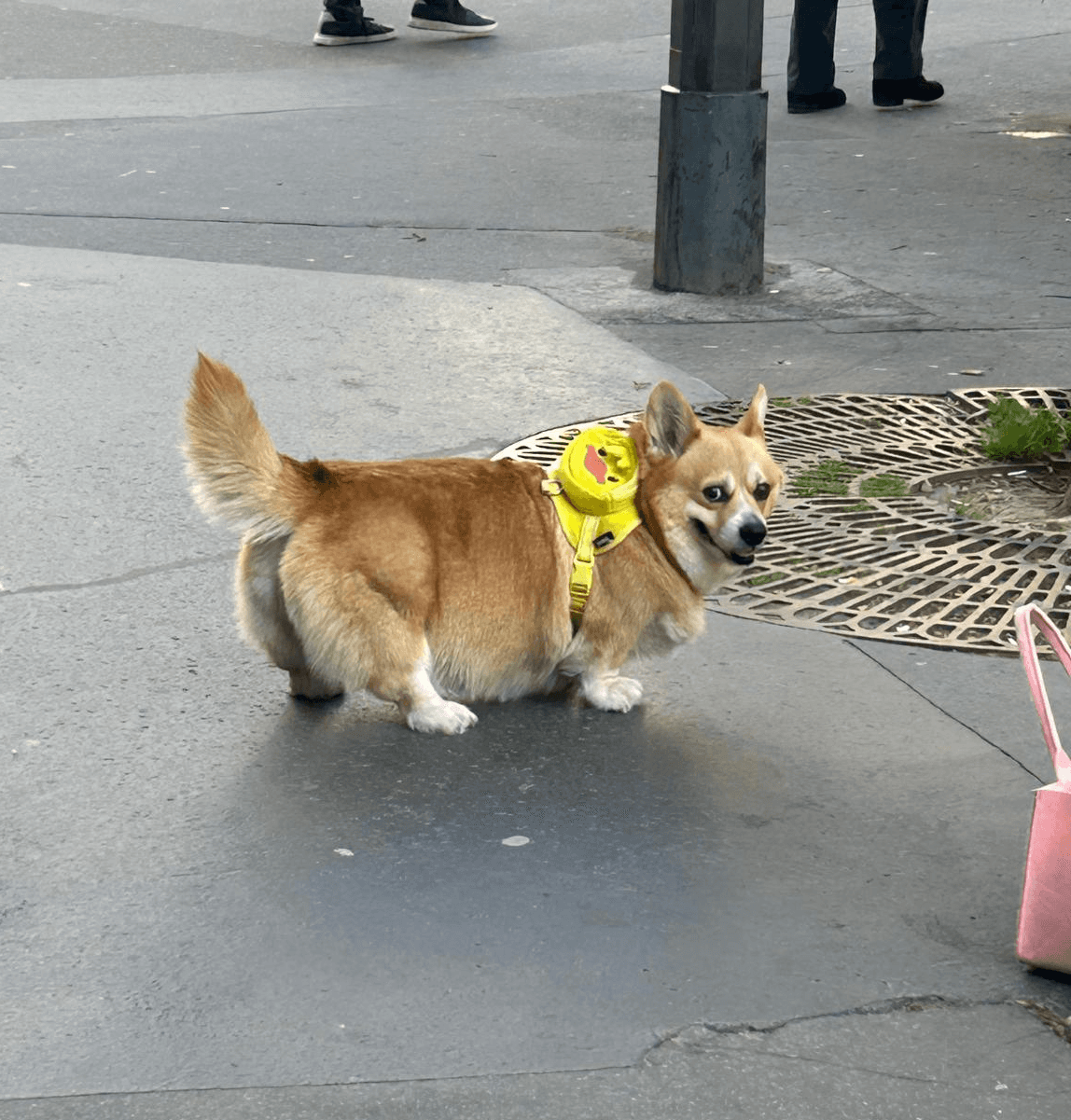
In real life, over 50% of French households have a pet. Cats, dogs, fish, rodents, reptiles, and sometimes animals that are outright illegal to keep (see our resource pack on the OFB.)
In our fiction, these companions are almost entirely absent. And with them disappears a reality that millions of viewers would instantly recognize, because they live it.
Characterization tool
The bond between a character and their pet: the way they interact with it, care for it, and talk about it, is a powerful and underused characterization tool. That relationship can be ambivalent, fraught, layered with contradictions, and hidden dimensions. In short, it reveals who they really are.
Just like humans, pets have their own personalities. To treat a living creature as a character is to stop seeing it as merely functional. Can a dog have fears that go beyond instinct? A cat, genuine vulnerabilities? Can a parrot make choices and act with something like agency?
Animal everyday life
Owning a pet also means: surprise vet bills that wipe out your savings, a cat that vanishes for a weekend, mandatory daily walks, an aquarium nobody wants after its owner dies, a pet you adopted as a couple that you have no idea what to do with after the breakup, a hamster that dies, and whose death you have to explain to a six-year-old.
These are situations built on friction, choice, and revelation, and they go beyond characterization to become genuine narrative engines:
Metaphor: An animal can stand in for grief, a breakup, trauma, a childhood memory, an inability to care for others, violence, or fragility — and can underpin an entire series' dramatic arc. This applies to living beings more broadly, too.
Did you know?
In Lost: the very first episode opens on the main character's eye, with the jungle reflected in it. The tone is established immediately — the series will follow its characters' struggle through a jungle that is both literal and existential.
Inciting incident / Stakes: Feeding a pet, keeping it alive, caring for it — or using it to secure a win (a horse show, dog show, race, or competition of any kind).
Source of social connection or conflict: Two dog owners who cross paths every evening on their walk; the web of relationships between pet owners and groomers, vets, pet-sitters…




3. The blind spot of predation
Our characters eat meat, wear leather, and buy products whose manufacture has destroyed forests, poisoned rivers, and wiped out species. Yet in our stories, they are innocent. Human predation on the living world is invisible.
Violence between humans is depicted in our fiction with remarkable precision and intensity: murder, betrayal, manipulation, war. And yet violence toward non-humans — the most widespread, the most systemic, the most ordinary of all - is the one form that fiction consistently refuses to show. Be honest: we all self-censor when it comes to this.
This invisibility is not discretion. It is a cultural lie. It perpetuates the idea that we are detached from the destruction, that faceless, abstract forces are to blame.
Fiction could try to show the mechanisms, not to blame but to reconnect.

A Zed & Two Noughts, 1985
📌 Plot ideas
Going further still: showing a character commit an act of environmental violence or predation and ensuring the audience registers it as such through direction, editing, and another character's reaction would be a powerful choice.
A character who illegally dumps pesticides in the woods to avoid disposal costs and in doing so, kills the fish downstream. Another who traffics animals, or simply abandons one. To see ourselves as predators is to acknowledge our share of the damage.
Hunting, bullfighting, horse or dog shows, any act that causes sudden and visible pollution, the destruction of animal habitats, illegal dumping — these are all simple, telling examples.

Avatar, 2009

b. Ecosystems (aka: arenas)
France is dotted with regional and national parks, nature reserves, state-owned forests, wetlands, bocages, lakes and garrigues. In French fiction, these environments are treated as interchangeable backdrops. Yet they are places of conflict, of characters and of specific narrative stakes – and each of these environments generates its own arenas, its own codes, its own power dynamics.
⚠ Warning:
Filming in these extremely fragile locations raises ethical issues. It is therefore essential to work in parallel on the narrative and production solutions to ensure they are brought to life in a respectful manner.
There are resources available to explore the specific issues facing each region: our series of toolkits will guide you. But beyond the arenas themselves lies the connection between the character and their ecosystem. And this connection is often fraught with ambivalence.
The person who sincerely loves a natural place yet votes for politicians who destroy it, who supports development projects without fully grasping their consequences, who grieves over the disappearance of species without ever making the connection with their own choices…
The most radical ambivalence is not a human contradiction but a contradiction inherent in reality itself: protecting one species can destroy another.
📌 Plot ideas
Reintroducing the wolf preserves a predatory dynamic that regulates ungulates and regenerates forests, whilst decimating the herds of livestock farmers who did not ask to be part of this experiment.
An activist who has spent ten years protecting a species and who learns that it is in deadly competition with a rarer endemic species.
The coral we protect by banning fishing is starving coastal communities who have no alternative…
There are no easy answers to these situations. They involve trade-offs, hierarchies of values, and losers. And the losers are often those who had the least say in the decision.
This area is so powerfully compelling precisely because it defies a black-and-white narrative; there are people who defend genuine and incompatible claims to legitimacy.
Embracing the distinctive features of ecosystems

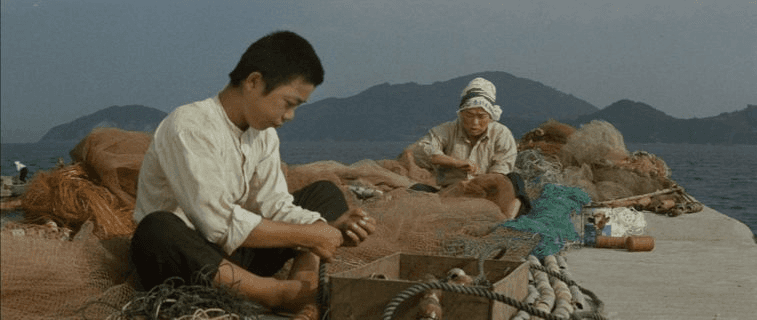


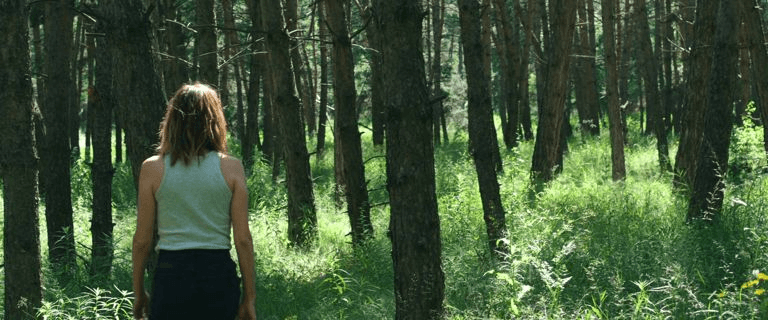

Some ecosystems and their distinctive features
Angelic nature vs hostile nature
We must be careful not to idealise what we seek to defend. A vision of nature as beautiful, serene, fragile and threatened, waiting to be protected, is a reductive view that risks being counterproductive. The same consideration we show towards characters can be extended to animals or nature, so as to prioritise complexity over essentialism. We might even consider shifting the main perspective to that of a non-human animal.
Real nature is indifferent to our emotions. It can be hostile, monotonous, exhausting. A woodland floor in November is muddy and dark. A river in flood destroys the banks that someone had just replanted. A fox eats the neighbour’s chickens. A deer collides with a car and seriously injures the driver. Ticks are on the rise. Tiger mosquitoes are moving northwards. Pollen and animals can trigger allergies that are sometimes severely debilitating, or even dangerous.
Showing nature as it really is – uncomfortable, unpredictable, and sometimes dangerous – restores its dramatic weight. A character who loves nature despite its difficulties is a credible character.
This rejection of naivety does not mean pitting a terrifying nature against an idealised one. It is simply a matter of showing it as it is: neither good nor bad, neither protective nor vengeful, but real, complex, and independent of our projections. It is precisely this independence that can become a powerful creative force.
A character who must come to terms with a nature that does not meet their expectations, that cannot be tamed, that does not reward effort, that destroys what has been built, is a character confronted with something beyond their control. This is a fundamental dramatic situation.
c. Dramatic approaches to biodiversity issues
1. Health
This is obviously the most concrete starting point for discussing the environment: health scandals involving pesticides, such as the chlordecone case in the West Indies, where soil and bodily contamination continues to cause prostate cancer decades after the product was banned.
Occupational diseases linked to chemical exposure: farmers suffering from Parkinson’s disease – recognised as an occupational illness after years of spraying – asbestos workers, winegrowers with respiratory conditions…
Respiratory conditions linked to air pollution, concentrated in suburban areas close to major roads or industrial sites.
📌 Plot ideas
A character confronted with denial by an institution or an employer
A long time lag between exposure and diagnosis, allowing the story to span several eras or generations within a single narrative…
Did you know?
Health and climate – the same struggle?
The idea that “protecting the environment means protecting our health” is widely recognised by the French (76 per cent), according to a study by Parlons Climat. What if discussing health scandals were an effective way in?
https://www.parlonsclimat.org/post/sante-comme-point-de-bascule
2. Changes to an ecosystem: a powerful dramatic force
When an ecosystem undergoes radical change (the collapse of a resource, the extinction of a species, a disaster), it is not just the landscape that changes: the whole fabric of social, economic and identity-related relationships is reorganised around this loss.
The disappearance of fish from the Mediterranean is not an isolated economic crisis. It is the destruction of an entire chain: a skill set becomes obsolete, the passing on of knowledge between generations is cut short, a collective identity collapses, and local hierarchies (who is the best fisherman, who knows the seabed) lose their meaning. People who defined themselves in relation to this ecosystem must now redefine themselves.
Other concrete examples include: the drying up of a lake that underpinned the entire economy of a valley; the arrival of an invasive species that destroys an oyster farming industry; and a forest fire that wipes out a rural community’s territorial landmarks and redefines who can stay, who must leave, and who has the means to rebuild.
These situations create losers without a clearly identifiable culprit, collective grief without a recognised ritual, and conflicts where everyone is right from their own perspective.
3. Rewilding: a source of conflicting values
Did you know?
When will we see mammoths in the Alps?
The terms ‘rewilding’, ‘renaturation’ or ‘re-wilding’ refer to methods designed to allow wildlife to reclaim its rightful place in an area from which it had previously been displaced. These methods span a spectrum ranging from allowing a garden to run wild to reviving prehistoric animals and reintroducing them to areas where they lived several thousand years ago.
Renaturation is a genuine movement in France, and it is causing real conflicts. Local councils are deciding to stop mowing roadside verges. Homeowners are letting their gardens run wild and finding themselves at odds with their neighbours. Farmers are replanting hedgerows and discovering that their neighbours regard them as mad.
What is fascinating is that this conflict pits two conceptions of cleanliness, beauty and order against one another: one person sees disorder where another sees life; one person is afraid of what they cannot control. It is a profoundly human conflict, and nature is merely the backdrop.
4. The law as the arena for biodiversity
In France, it is illegal to destroy a swallow’s nest. A hedge planted more than thirty years ago cannot be removed without authorisation. A developer who discovers a population of crested newts on their land may see their project brought to a sudden halt. A farmer may be prosecuted if their pesticides drift onto a neighbour’s beehive.
These legal situations pit legitimate rights against one another, create winners and losers, and demand morally complex decisions. A lawyer specialising in environmental law has a field of practice as vast as that of a criminal lawyer – yet is far less common.
5. Citizen science
Many French people volunteer their time to support biodiversity.
As well as volunteers with the SPA, millions of French people take part in citizen science programmes: they count birds in their gardens for the CNRS, report sightings on iNaturalist, and collect water samples for quality studies. These communities are informal groups that produce data of genuine scientific value. And this data sometimes gives rise to conflict.
6. Community and political engagement
A final angle could be to portray the individuals and groups fighting to preserve this biodiversity, to highlight these community and local council initiatives, or even the political manoeuvring aimed at undermining them. For associations and collectives defending biodiversity are spaces for encounters, power struggles, stories of love and friendship, teeming with fascinating tales.
📌 Scene Ideas

d. The culture of biodiversity: a key issue
There are those who, looking out of a train window, see trees. Those who see oaks. And those who see a diseased sessile oak, whose leaves are turning red too early, infested with processionary caterpillars. Where some see a bird, others see a blue tit and know that there are fewer of them than there were ten years ago.
This disparity in perspective and culture is a reality that fiction could embrace and convey in unexpected and egalitarian ways to challenge established norms.
This naturalist knowledge – or lack thereof – can give rise to admiration, irony, or a comic or dramatic incongruity, depending on the context.
To ensure that, just as with happiness or success, knowledge of plants, species and cycles does not belong to any particular social class.
Who are the people who have the most intimate, concrete and everyday relationship with the living world? The gardener who reads the soil. The dog-walker. The fisherman. The hunter. The livestock farmer. The officer from the French Biodiversity Agency patrolling the marshes. The forestry worker who can tell if a tree is diseased by the sound it makes as it falls. The market gardener who knows what pesticides have done to his river. The woodcutter. The pest controller.
📌 Character ideas
A lad who knows chickens like no one else.
A cleaner who knows every plant in the block of flats she’s looked after for twenty years, and who can tell, just by the colour of a leaf, that there’s a problem with the plumbing on the third floor.
An old farmer whose empirical observations on insect life cycles challenge the models of agricultural engineers.
A night-time driver who knows the routes foxes take along his roads.
These characters are strategic, competent and decisive. Placing them at the centre of a narrative achieves two things at once: it restores balance to social representation and gives living things their rightful place in the story. For the invisibility of biodiversity in our fiction and that of the working classes are closely linked.
These are real, specific skills, acquired through experience and passed down through generations, which our fiction fails to highlight.
Practical leads
Conclusion:
Glamorising the connection with nature: subverting modernity
At present, fiction portrays modernity as digital connectivity, urban mobility and belonging to networks: characters behind screens. A character who knows the names of the birds in their neighbourhood is presented as charming, eccentric or an outsider.
What if it were the other way round? What if the ability to perceive the living world were portrayed as a form of superior lucidity? Not as a regression to the past, but as a rare, precious, subversive skill in a world that has done everything in its power to eliminate it?
From our perspective or that of the character, it is interesting to ask what they hear and what they listen to. Are they connected to the outside world, or do they shut it out with their headphones?
Similarly, presenting an understanding of biodiversity as a skill that enables problem-solving and progress – that is to make it desirable, not merely virtuous.
END-OF-CHAPTER CHECKLIST
A poetic interlude:
What if contemplation were to find its way into our stories?
I’m thinking of that film by Wim Wenders, *Perfect Days*, where time seems to slow down, mirroring the pace of a character who seeks beauty in the details, in the nature around him. He isn’t seeking to do or act; his movement is an inner one. It’s no surprise that Wenders set his film against the backdrop of Japanese culture, which is deeply contemplative. A country that almost comes to a standstill when the cherry blossoms are in bloom. Japanese cinema often gives prominence to the observation of life and to reflection rather than action. It’s inspiring.

Perfect days, 2023

La Couleur Pourpre, 1985
There’s also that scene in Spielberg’s *The Colour Purple*, which made a deep impression on me as a child. One of the heroines, Shug Avery, says to her friend Celie: ‘It upsets God if we walk past a field of violets without noticing them. ’ You don’t need to be religious to be moved by it. I remember that this simple sentence changed the way I looked at the world around me, the way I walked through a field of flowers, feeling a sense of responsibility and connection. It’s proof that the power of cinema lies in the smallest of details.
I’m well aware that we are often commissioned to write, that we depend on feedback from broadcasters who themselves are accountable to those above them. We must constantly ramp up the stakes, move quickly, and surprise the viewer – who now watches stories on their smartphone – so they don’t switch off. This is all the more true with streaming platforms. I’m stating the obvious.
But when we’re constrained by commissions, perhaps our power to effect change lies precisely in the details? Whatever the type of film, I tell myself that elements of nature, of living things, of biodiversity, can pop up all over the place in our stories and leave a lasting impression on viewers’ minds, even subliminally.
What if, before heading off to yet another fight, Rocky went for a run in a forest rather than on tarmac, and between strides he paused to look at the trees and listen to the birdsong? There he is, humbled by the treetops, by the infinitely greater world; he breathes deeply, whilst a deer eyes him up. Perhaps in his little flat at the top of a tower block in Philadelphia, there are plenty of plants he loves to water, and not just a cactus or a ficus left to die. He feeds the birds that fly right up to the top of the tower… Unlikely, of course, but who knows. After all, some James Bond villains used to stroke cats. Perhaps they also have a vegetable patch.
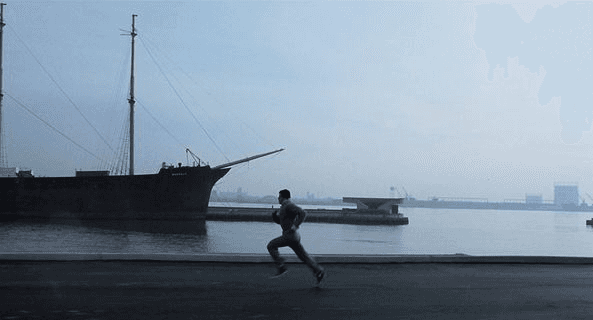
Rocky Balboa, 2006

James Bond From Russia with Love (1963)
These are very modest steps forward, but I tell myself they’re well within our humble reach.
And that means not letting go of the scripts once production begins. It means engaging with those who will be directing, with the set design team—who are often very sensitive to environmental issues and responsible for buying, building and dismantling sets. A set design team that, I’m sure, would be happy to think about the place of plants in an interior, about greening a wall or a space. What if a framed photo on a wall depicted a landscape rather than Times Square?
Incorporating elements of life and contemplation into all our writing does not prevent our more personal projects from being more radical, commensurate with the only issues that truly matter: the climate emergency.
A. V.